










By Sue Masaracchia-Roberts
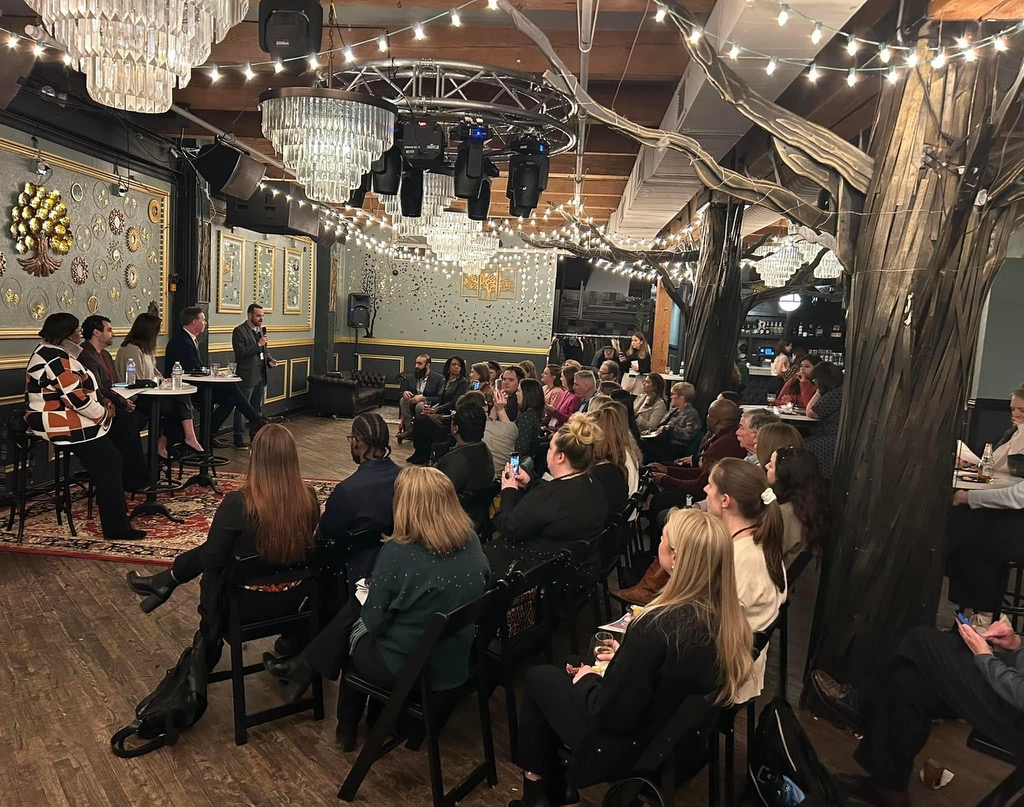
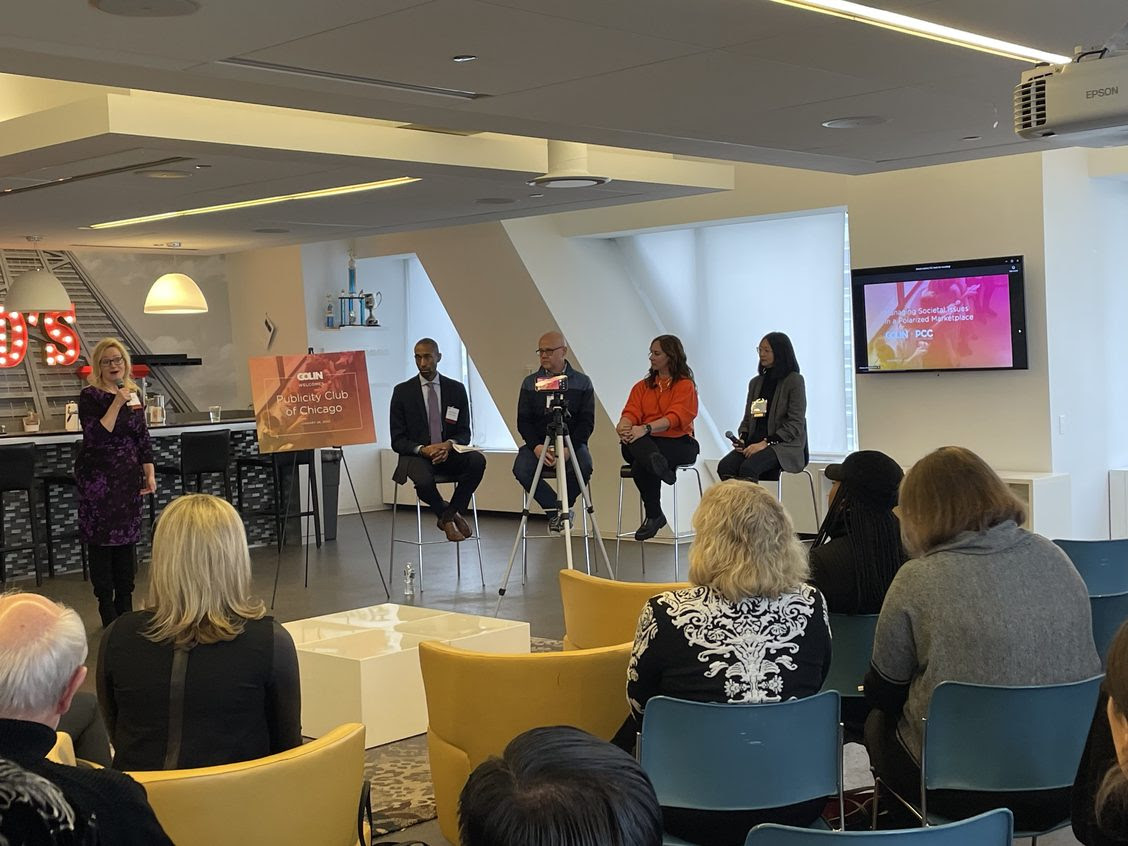
The healthcare industry continues to be a challenging environment for PR professionals, but social media has greatly expanded the opportunities for visibility and leveraging PR and marketing goals. The March Publicity Club of Chicago luncheon panel represented both the agency and client perspectives, discussing critical aspects of integrated programs.
Moderated by Lynn Hanessian from Edelman, panelists held different perspectives but agreed on leveraging interactive social media to educate and communicate with clients/patients, as well as rectify misperceptions and negative customer-service concerns before they become bigger problems.
Lynn Hanessian, President, Science Unit
Edelman
lynn.hanessian@edelman.com
As president of Edelman’s science communications team, Lynn Hanessian leads a diverse group of regional, national and global teams in providing communication, direct stakeholder engagement, opinion leader collaboration and advocacy counsel to pharmaceutical and diagnostics companies; to professional and advocacy associations; and to other organizations focused on scientific concerns.
As a patient advocate who is passionate about leveraging communications and engagement channels to tackle a variety of public health challenges, Hanessian serves on the boards of the Breast Cancer Network of Strength and the Asthma and Allergy Foundation of America.
Citing a study in the New England Journal of Medicine, Hanessian said that 89 percent of physicians in the United States say social media is important to their practices, and six out of 10 patients have Internet access. More challenges may be on the horizon during this digital age.
This makes it all the more important for healthcare to bring these new tools into the practice environment as healthcare evolves. “Patients and physicians both are going to the Internet to sort out information. Links to a variety of good information are helpful.”
Hanessian added that 90 percent of journalists working on stories are apt to visit corporate websites for information. One of the jobs of PR professionals is to make it easier for them to find the information they are seeking.
Simon Goldberg, Director
Electronic Communications and Corporate Public Affairs, Abbott
simon.goldberg@abbott.com
Initially trained as a molecular geneticist and genetic counselor, Simon Goldberg began his career at a biotechnology firm as an investment analyst. He joined Abbott six years ago as a corporate communications strategist.
Having migrated from working in the pharmaceutical products group to his new role as director of electronic communications, Goldberg focuses on Abbott’s social media, Internet, and intranet footprints.
Employing 83,000 people internationally, Abbott is a diversified company that works in multiple arenas, including pharmaceuticals, nutrition, and diagnostic testing and devices.
“With big business units under a thin corporate layer, Abbott offers a complicated business challenge,” said Goldberg. “My job is to make sure the business as a whole is headed in a branded direction.”
Goldberg’s function is to provide messages through social media aligned with the other corporate strategies to push the brand forward. This includes creating several channels for YouTube that cover a variety of corporate brands.
“Physicians are gatekeepers,” Goldberg said, adding, “Pediatricians are not online while surgeons are wired. Normally, they are starting out in business and are in the community and talking all the time.”
With so much misinformation relating to health on the Internet, the FDA is increasingly being looked to as a source that can separate truth from fiction. For example, the FDA helped control the media-induced panic over H1N1.
“We have a responsibility as to the type of information that we put up,” said Goldberg. However, “detractors have taken snippets and used them out of context, so you have to anticipate this.”
Bridget Houlihan, Public Affairs Writer
Blue Cross Blue Shield of Illinois
Bridget_Houlihan@bcbsil.com
The content strategist in public affairs at Blue Cross Blue Shield Illinois (BCBSIL), Bridget Houlihan specializes in writing, packaging and delivering messages both online and in print. In this role, Houlihan works to integrate online engagement tools into the company’s community outreach efforts, foster member loyalty, provide customer service, support marketing efforts, and encourage consumer interaction.
Prior to joining BCBSIL, this Rotary scholar worked in communications and media relations for the Federal Reserve Bank of Chicago.
“Twitter drives people to our website and helps drive our content,” said Houlihan, adding, “You can often turn things around through Twitter. You can take questions and respond to them on Facebook or change your Web content based on conversations. We have the opportunity to see wheat people are discussing and engage with them.”
Conversations may not come through traditional or set channels; disruptive technology goes around the status quo.
Houlihan explained that her group approached social media by “monitoring it to know what is going on in that space in order to determine of our strategies will meet customer needs.” BCBS considers its customers its business partners, so they are sensitive to how they communicate with them.
The strategy began with determining appropriate content for Facebook and Twitter. Implementation was the easy part. The more difficult part was asking the harder questions of why they should use those vehicles and how to start doing so successfully.
“We used an interdisciplinary team from across the organization and four states,” she said. “The team was housed in marketing and included legal, Internet security and risk assessors as well as customer service. We worked to match our business goals with the appropriate tools.”
The first step was analyzing the demographics across their business, and then tailoring the messages to align with the company’s needs so they fit with the different media formats. BCBS uses Radian6 to monitor social media, to provide statistics, the weight of each network, and to ensure the type of media is reaching the right people.
For Facebook, they considered its benefits, what its users expect of it, and what BCBS could to do to meet the expectations of its 3,500 Facebook fans as well as align with its business goals.
With approximately 1,300 Twitter followers, BCBS needed to determine how to gauge audience questions and cater their messages to these customers. The company discovered that 36 percent of their customers do not want to interact, but are good accounts, while “seven percent have not updated their information in ages.” Twitter kicks inactive users off its system after a time.
“Twitter is an excellent customer service channel to talk to those mentioning the company,” Houlihan said, “a way to reach out and ask if we can help them as well as turn [potentially] negative comments into positive ones.”
It is well documented that people tend to share a lot of personal information on social networking sites. As HIPPA privacy laws heavily regulate the medical insurance industry, BCBS posts a disclaimer advising people not to post personal information, and if posted, they needed a way to confidentially respond to the client.
“If someone asks a question, others may have the same question,” said Houlihan, “or we may let the rest of the online community know we have responded by saying how nice it was to talk to [the person] on the phone and how glad we were to be able to help.”
BCBS also is starting to position subject matter experts on LinkedIn, having executives start or join groups. “It is a new way to network. We are just entering this domain.”
As for having an employee social media policy, BCBS considers its employees all company representatives and does have a policy that reflects that. The company cautions staff to be careful how they use their “personal brand” and makes staff aware that they must prudently utilize social media.
“When we are not communicating directly to employees, we informally use Yammer, an intranet tool,” said Houlihan. “We are using tools more and more and adopt them, [through use], into the social media team. Our policies are not that specific as tools are changing all the time and they need to be more general to blanket everything. The social media team meets weekly and talks several times a day. As topics come up, we address them.”
Jennifer Monasteri, Media Relations Manager
Northwestern Memorial Hospital
jmonaste@nmh.org
Jennifer Monasteri began her career at Weber Shandwick Worldwide as part of the leadership team working on high profile brands before migrating to the client side.
She left the agency to join Bally Total Fitness Corporation as director of public relations before joining Northwestern Memorial Hospital (NMH) in 2006. In her current role as manager of media relations, Monasteri oversees the day-to-day activities of her four person staff, in addition to managing interactions with reporters, coordinating pitch efforts, and leading the development and implementation of the organization’s social media engagement. She plays a key role in managing crisis communications for NMH.
NMH is just wading into the world of social media, according to Monasteri. “We are listening in and just beginning to get involved in Twitter, Facebook and YouTube. We use blogs in a crisis to push out information to patients and the media. [Social media] is a way to engage; requiring us to identify problems we didn’t even know existed. We had to learn and respond quickly. It’s become one of our action items.”
“It all began with achieving buy-in from the C-suite and then slowly launching a social media strategy,” said Monasteri. “Then we focused on ways to engage our communities at different levels and ensuring that a comfort level could be achieved even if it meant relinquishing control. We had to become less formal in order to connect,” she said.
NMH also needed to make it clear that not every department needed to be on Facebook or Twitter since their social media requirements needed to align with their business goals.
“We knew that time and resources were another issue,” she added. NMH needed to become more self-disciplined and build content that addressed the questions their audiences need answered and provide the information of most value to their audiences.
Monasterisaid their staff is being educated about the NMH policies already created for social media; this education covers the gray areas as well. Some policies, like those for gaining approvals on blogs, are still evolving so they fit into goals and processes.
As part of their strategy, NMH created ‘my e-patient.’ “Our policies let our customers know what they can expect from us,” said Monasteri. “Everyone likes to see followers and fans. We are not as worried about the numbers as we are about meaningful engagement.”